f you search for the 2012 AFC Asian Cup schedule, you'll hit a dead end—that tournament didn't exist. The 2011 edition was held in Qatar, and the next one didn't come until 2015 in Australia. So why does this query keep popping up?I've seen it in forums where fans confuse the Olympic football schedule with the Asian Cup, or mix up the year with the 2012 AFC Challenge Cup. Let's clear this up.
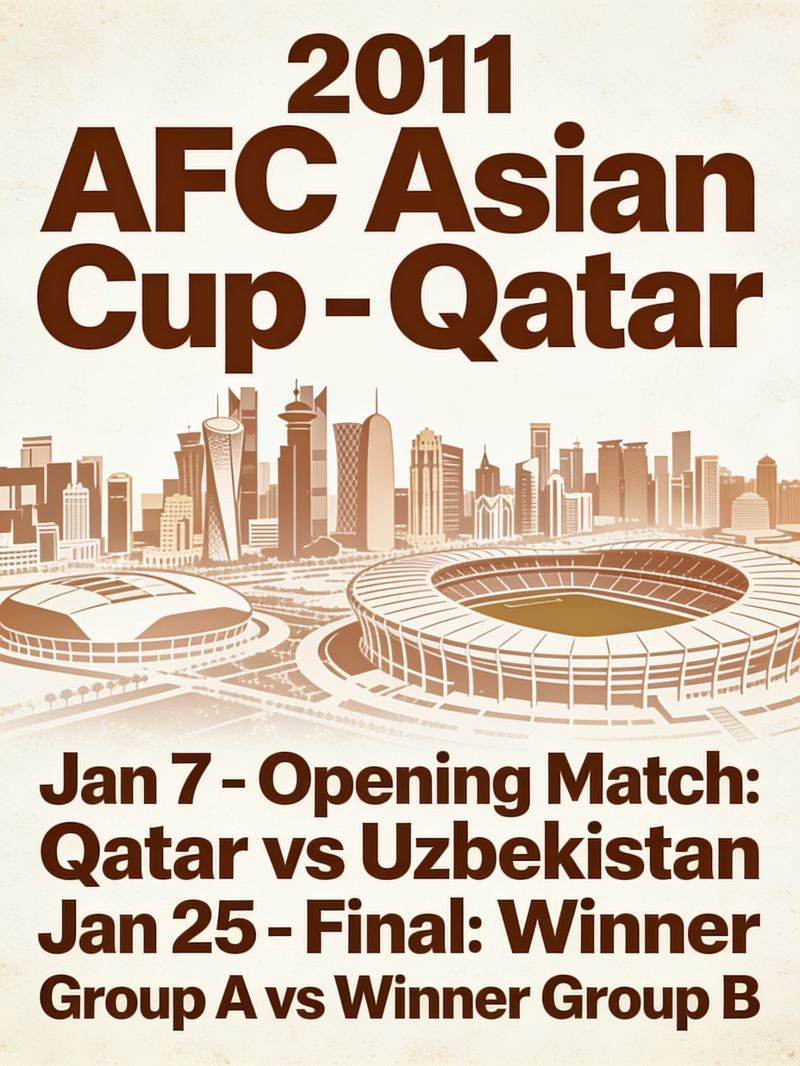
The actual 2011 AFC Asian Cup ran from January 7 to January 29 in five Qatari cities: Doha, Al Rayyan, Al Khor, Al Wakrah。and Al Gharafa. Sixteen teams, 32 matches, one month. If you're looking for a template to understand how a January tournament schedule works, that's the one to study. The 2012 AFC Asian Cup schedule doesn't exist, but the 2011 pattern—group stage crammed into ten days, knockout rounds every three or four days—is the blueprint.Why does the confusion persist?Partly because 2012 was an Olympic year (London), and the AFC U-22 Asian Cup qualifiers also took place that year. I remember scrolling through old fan sites where people posted '2012 AFC Asian Cup schedule' PDFs that were actually for the AFC Challenge Cup in Nepal. The real lesson: always cross-check the tournament name. For 2011, the final was Japan vs Australia on January 29 at Khalifa International Stadium—a 1-0 win for the Samurai Blue in extra time. That's the match people often mislabel as 2012.If you're planning to use a past schedule for reference—say, to estimate travel times between venues or understand rest days—the 2011 Asian Cup is your best bet. Group stage matches were played at four stadiums, with Doha hosting most knockout games. Each team played three group matches in eight or nine days. That's tighter than the World Cup. My advice: don't rely on any '2012 AFC Asian Cup schedule' you find online;instead, pull the official 2011 match log from the AFC website archives. It's still accessible and gives you exact kickoff times in local AST (UTC+3).Bottom line: the 2012 AFC Asian Cup schedule is a phantom. But if you're researching tournament logistics or building a historical database, the 2011 edition gives you everything you need—dates, venues, and a dramatic final. Just don't cite a year that never hosted the tournament. Double-check your sources。
and you'll avoid the same trap I fell into when I first started following Asian football.