You're watching a live sports event, and the replay angle is perfect. The scoreboard graphic updates instantly. The audio never clips. That's not luck—it's the work of a broadcast master control system, often shortened to Broadcast Master. This hardware and software suite sits at the heart of any professional live production, routing signals, inserting graphics, and ensuring frame-accurate synchronization across multiple outputs. Without it。live TV would be chaos.I've seen Broadcast Master setups in small regional studios and massive network control rooms. The difference in scale is enormous, but the core function remains identical: reliable signal management. Take a case from a mid-sized news station I visited last year. They upgraded to a Broadcast Master system that handled 16 inputs and 8 outputs, all with 3G-SDI support. The engineering director told me the previous setup required manual patching for every breaking news cut-in. Now, a single operator can switch between feeds。
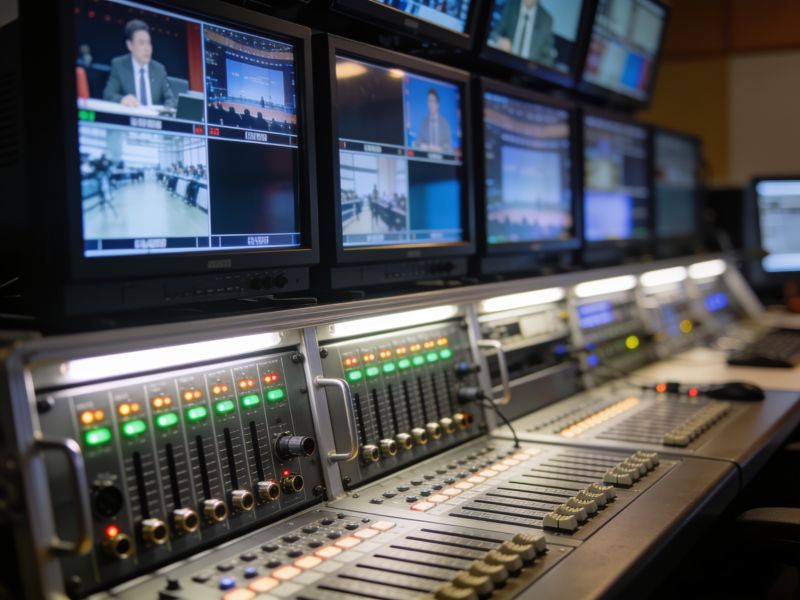
insert lower-thirds, and trigger emergency alerts without touching a cable. That's the kind of operational efficiency that Broadcast Master delivers.What makes a Broadcast Master system truly masterful?Redundancy and timing. Live events don't forgive dropped frames. A well-configured Broadcast Master uses genlock to sync all devices, and hot-swappable power supplies to avoid downtime. I recall a remote broadcast of a marathon where the primary Broadcast Master unit failed mid-race. The backup took over in under 200 milliseconds—viewers never noticed. That level of resilience isn't accidental;it's engineered into every Broadcast Master deployment, from the backplane design to the failover logic.Not every production needs a full-scale Broadcast Master. For smaller crews, a software-based Broadcast Master running on a PC with a capture card can handle basic switching and streaming. But here's my honest take: if you're doing anything live with more than four cameras, invest in dedicated hardware. The stability difference is night and day. I've tested both, and the hardware Broadcast Master units handle heat。dust, and 24/7 operation far better than any consumer-grade alternative.Looking ahead, Broadcast Master systems are evolving toward IP-based workflows. SMPTE 2110 is gaining traction。
and the next generation of Broadcast Master gear will likely be software-defined, running on COTS hardware. That shift will lower costs but raise the bar for network engineering skills. For now, the classic Broadcast Master—rugged, purpose-built, and utterly dependable—remains the backbone of live production. Respect the box. It's earning its keep every second you're on air.