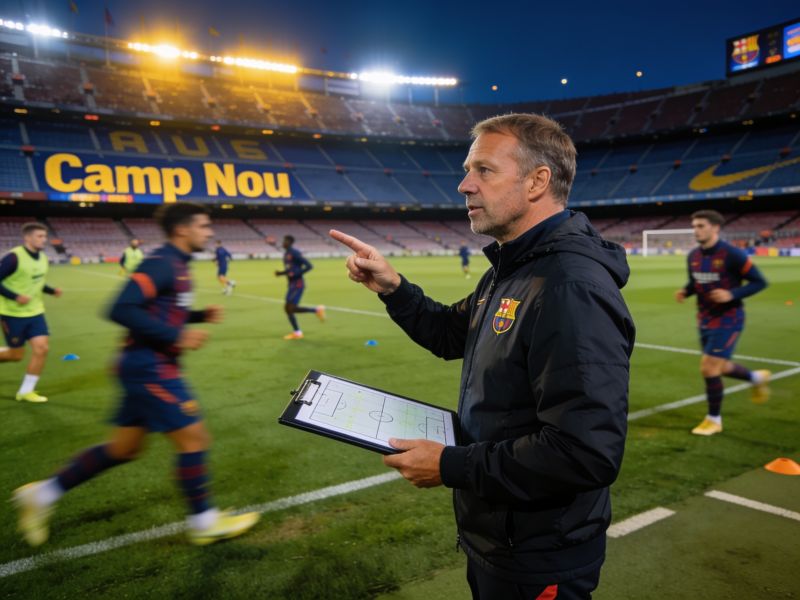
Barcelona coach Hansi Flick arrived at Camp Nou in May 2024 with a reputation built on speed, structure and one unforgettable European campaign. His appointment followed the departure of Xavi Hernández, whose emotional connection with the club could not fully shield him from growing pressure over results and consistency. The Barcelona coach inherited a squad filled with young talent。expensive expectations and several unfinished tactical questions. Lamine Yamal had emerged as a fearless attacking presence, while Pedri, Gavi and Frenkie de Jong remained central to the club’s plans despite injuries and uneven form. Flick’s task was not simply to restore confidence. He had to make Barcelona more intense without damaging the technical identity that has shaped the club for decades.Flick’s methods are likely to be judged through the team’s behavior without the ball. At Bayern Munich, the Barcelona coach demanded aggressive pressing, compact distances and rapid transitions after possession was lost. That approach helped produce the treble in 2020。although it also exposed a high defensive line when pressure failed. Barcelona’s defenders will therefore face a delicate adjustment. Ronald Araújo has the pace to cover space, while Jules Koundé offers flexibility on the right and Pau Cubarsí has shown composure well beyond his age. The Barcelona coach will need those players to defend forward, not simply retreat toward their own penalty area. One misplaced step can turn an ambitious press into an open invitation for a counterattack.
The midfield may reveal more about Flick’s influence than any headline signing. Barcelona have often looked most convincing when their midfielders move the ball quickly and occupy different heights, but injuries have repeatedly interrupted that rhythm. A Barcelona coach working with this group must balance control with urgency. Pedri can dictate tempo between the lines, De Jong can carry the ball through pressure。and Gavi brings a combative edge that changes the tone of matches. The emergence of younger players adds another layer. Marc Casadó, for example, represents the kind of disciplined option who can give the Barcelona coach a safer platform when the game becomes chaotic. That does not mean abandoning possession. It means making possession serve a clearer purpose.Flick’s handling of the forward line will attract equal scrutiny. Robert Lewandowski remains the most established finisher。but the Barcelona coach must decide how to preserve the striker’s energy while keeping the attack unpredictable. Yamal’s ability to isolate defenders has changed the geometry of Barcelona’s right side, and the teenager often looks most dangerous when given permission to make the first decision himself. Raphinha offers direct running and relentless work, while the left flank has demanded a more stable solution. The Barcelona coach may favor a front three that presses immediately after losing the ball, but that system requires every attacker to accept defensive responsibility. A brilliant winger who switches off for five seconds can undermine the entire plan.Supporters will judge the Barcelona coach by more than tactical diagrams. They will watch whether the team competes in difficult away matches, whether young players receive trust after mistakes and whether the club’s football carries a recognizable edge. Flick has already shown in previous jobs that he prefers clear instructions over lengthy philosophical debates. That bluntness could be useful at a club where every training-ground detail quickly becomes a public argument. It could also create friction if results stall or senior players resist demanding workloads. Barcelona do not need a manager who merely protects its image;
they need one willing to make uncomfortable choices. The Barcelona coach has inherited a promising but imperfect group, and his success will depend on turning individual talent into collective habits. If he can do that, the Camp Nou may again feel less like a museum of past glory and more like a difficult place for opponents to visit.